
Breed: Icelandic
Species: Sheep
Colour: White
Country: Iceland
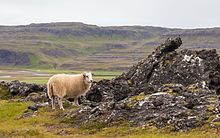
History: The Icelandic sheep (Icelandic: íslenska sauðkindin) is a breed of domestic sheep. The Icelandic breed is one of the Northern European short-tailed sheep, which exhibit a fluke-shaped, naturally short tail. The Icelandic is a mid-sized breed, generally short-legged and stocky, with face and legs free of wool. The fleece of the Icelandic sheep is dual-coated and occurs in white and a variety of other colors, including a range of browns, grays, and blacks. They exist in both horned and polled strains. Generally left unshorn for the winter, the breed is very cold-hardy. Multiple births are very common in Icelandic ewes, with a lambing percentage of 175–220%. A gene also exists in the breed called the Þoka gene, and ewes carrying it have been known to give birth to triplets, quadruplets, quintuplets, and even sextuplets on occasion.
Ewes can be mated as lambs as early as five to seven months, although many farmers wait until the ewe's second winter before allowing them to breed. They are seasonal breeders and come into estrus around October. The breeding season can last up to four months. Rams become mature early and can start breeding as early as five months.
Descended from the same stock as the Norwegian Spelsau, brought to Iceland by the first settlers, Icelandic sheep have been bred for a thousand years in a very harsh environment. Consequently, they are quite efficient herbivores.
Uses: Meat, wool