
Breed: Brakel
Species: Chicken
Colour: multicoloured : white, silver, gold, chamois, black, blue
Weight: males and females : 2,5 kg
Country: Belgium
Description: Brakel is a very old breed (15th century) from southern part of East-Flanders (western Belgium) which was once popular from the north of France up to The Netherlands and from England up to Germany.
Gradually, more attention was paid to the drawing and the colour of the animals and in 1898 a special club was founded for the Brakelhoen. The breed knew a period of great growth until the First World War. After the war, the import of hybrids ensured that the Brakel increasingly came under pressure as the leading egg producer in Flanders. In 1971, the Brakel was in a sorry state. The remaining Zilverbrakels were brought together: two hens, a cock from Germany and another twelve eggs. In addition, one Gold Bracke cock was found. From this handful of animals, the Brakel was rebuilt to a fairly popular breed.
History: There are several theories about the origin of the Brakel breed. We will probably never know the true facts. However, there are traces which show that the ancestors of our Brakel fowl were already centuries ago part of the poultry that was kept by farmers around their farms in the region of Nederbrakel and Oudenaarde. Later, the distribution area of the Brakel expanded from northern France to the Kempen. Due to the large differences in living conditions in this wide area, two types emerged within the breed. On the Kempen soil a lighter animal was found than on the fertile Flemish soil. The lighter variant was given the name 'Kempens kieken', now Kempens hoen (Campine).
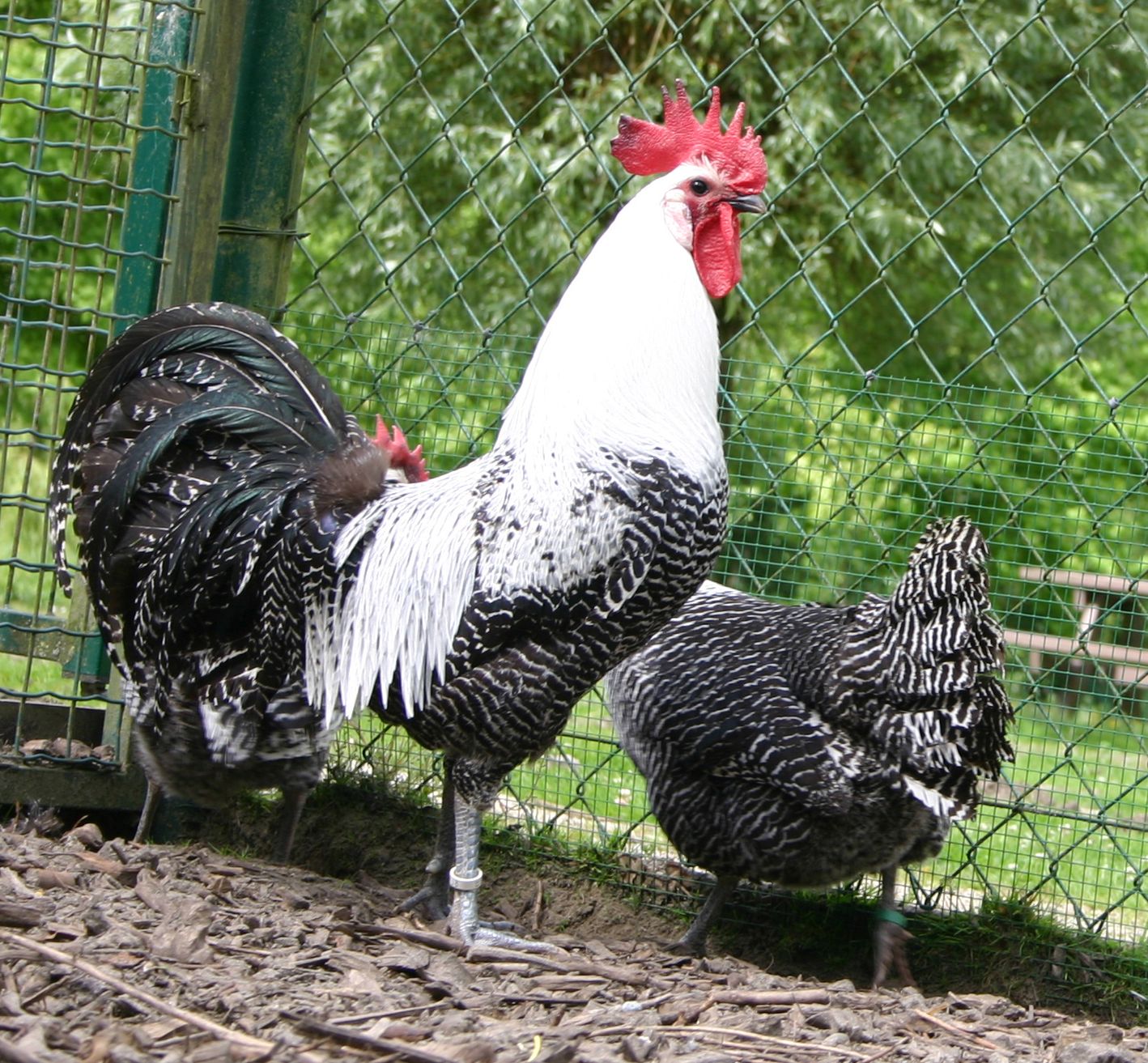
Morphology: The Brakel is a stately, proud and beautiful country hen that is hardy and resistant to the vicissitudes of our North Sea climate. They are satisfied with relatively little food. Recognised colour varieties of the Brakels are: silver, gold, lemon, chamois, white, black, blue, blue laced, white flowered. The most common are the silver and gold pretzels. These are also the colour bases on which SLE focuses. In these colour varieties, a tight banding between black and white (silver) or black and brown (gold) creates a beautiful pattern. The collar of the hen and the decorative feathers of the rooster should be as pure as possible without black dots.
Uses: Egg
Performance: 200 eggs per year