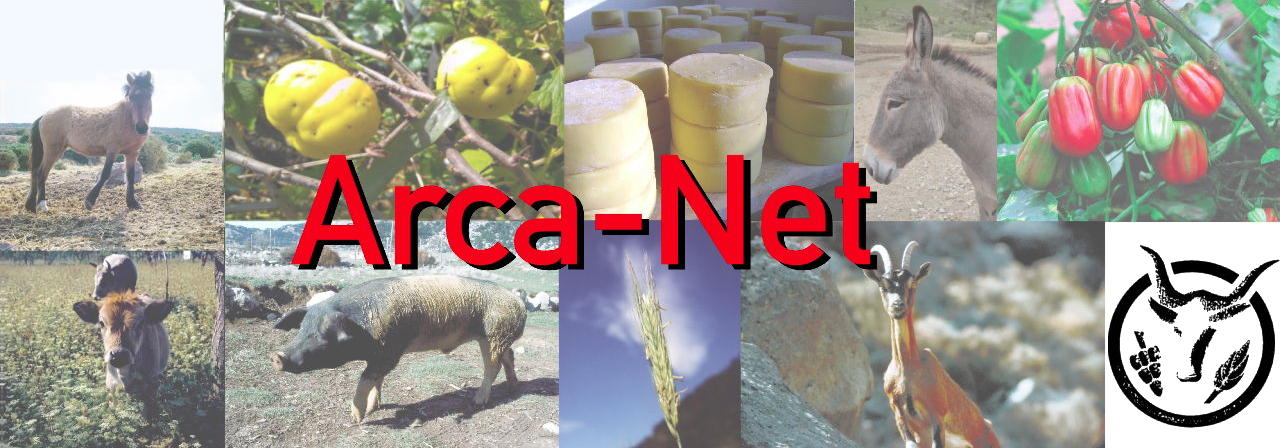

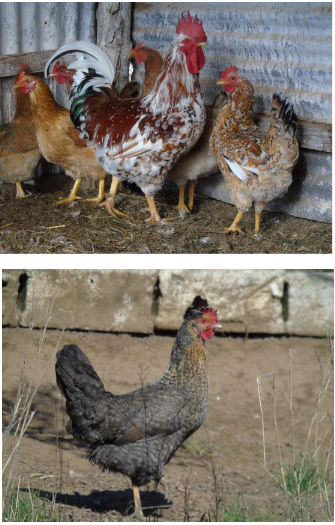
Breed: Thessalian Plain Chicken
Synonyms: Karagouniki chicken, Karditsa chicken
Species: Chicken
Weight: Cocks/Hens: 1.5-3kg/1-2kg
Country: Greece
Description: Slaughter weight 1.3–2.6 kg and 0.7–1.5 kg respectively.
Has brooding instinct. Incubates 1–3 times annually.
Resistant to diseases, high temperatures, and probably high levels of humidity.
Dissemination: Population: 500–1000 birds. Stable or on a declining trend. The greatest part of chicken in the Thessalian plains (97%) consists of commercial hybrids, crosses or foreign breeds. Only 3% represent native stock (autochthonous phenotypes). This relic population survives in closed traditional rustic flocks. In recent years certain preservation attempts took place. Currently there are more than 70 pure flocks though a great number of birds are scattered in mixed flocks. The true size of the population is unknown.
History: The only Greek population about which there are generalized written references. Many published zootechnical works of the period 1900-1960 mention Thessalian chicken as the most important of all Greek chicken at the time and described them as of “high caliber” (high specifications). The Averofios Farm School at Larissa in Thessaly in the early 1900s attempted to create a native breed from local chicken but the endeavour was not completed despite the overall good prospects*. Furthermore, there are hundreds of testimonies by Thessalian inhabitants and old photographic documentation confirming this type of chicken as traditional of the region. This specific type is found mainly in the lowlands of Karditsa prefecture.
Morphology: 500–1000 birds. Stable or on a declining trend. The greatest part of chicken in the Thessalian plains (97%) consists of commercial hybrids, crosses or foreign breeds. Only 3% represent native stock (autochthonous phenotypes). This relic population survives in closed traditional rustic flocks. In recent years certain preservation attempts took place. Currently there are more than 70 pure flocks though a great number of birds are scattered in mixed flocks. The true size of the population is unknown.
Specials: The Karditsa type-population is better defined and when strictly selected fast acquires traits of a conventional breed.
Uses: Eggs and Meat
Performance: Laying capacity 100–110 eggs annually. Average egg weight 50.4 grams.