
Breed: Dorset Down
Species: Sheep
Country: England
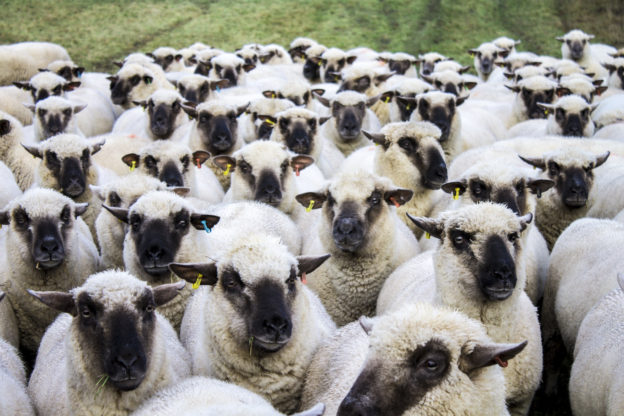
Description: A Dorset Down ram can be used with confidence on any breed of ewe, and many farmers using Mule and hill ewes have been impressed by the much improved conformation of their lambs when sired by a Dorset Down. Difficult lambing cases can be eliminated even when used on lambs because of the small head and fine shoulders. The lambs are very hardy at birth, vigorous and ready to suckle.
Dorset Down rams will work at any time of the year, and because of their exceptionally high pheromone count also make very good teasers.
The Dorset Down ewe will take the ram in most months of the year, is apparently unaffected by extremes of temperature and being docile and adaptable is ideal for close winter housing. Its usual to put 40 to 50 ewes to one ram which is quite capable of serving some 20 ewes in 24 hours.
The Dorset Down fleece is one of the most highly valued British fleeces. The wool is short and fine in texture on mature sheep, while good tight wool on the lambs resists bad weather. Fleece weights range up to 2.177kg washed and up to 2.450 kg greasy. The British Wool Marketing Board classes Dorset Down wool as one of the highest grades in the country; considerable quantities of it go to the hosiery trade.
History: In the 1980’s 43% of Britain’s ewe population was mated to a ram of a ‘Down’ breed but the introduction of well advertised foreign breeds meant the Dorset Down, in common with many traditional breeds, saw a reduction in demand and flock numbers. However, the increasing market demand for “real food” and recent CAP reform, has meant that the Dorset Down has returned to the fore as the ideal solution for the production of premier quality lamb. Its suitability to extensive, and organic farming systems has also driven demand for the breed, with record prices now being made at the Dorset Down Sheep Breeders’ Association’s Annual Breed Sale.
Uses: wool, meat