
Breed: Balkan Ziege
Species: Goat
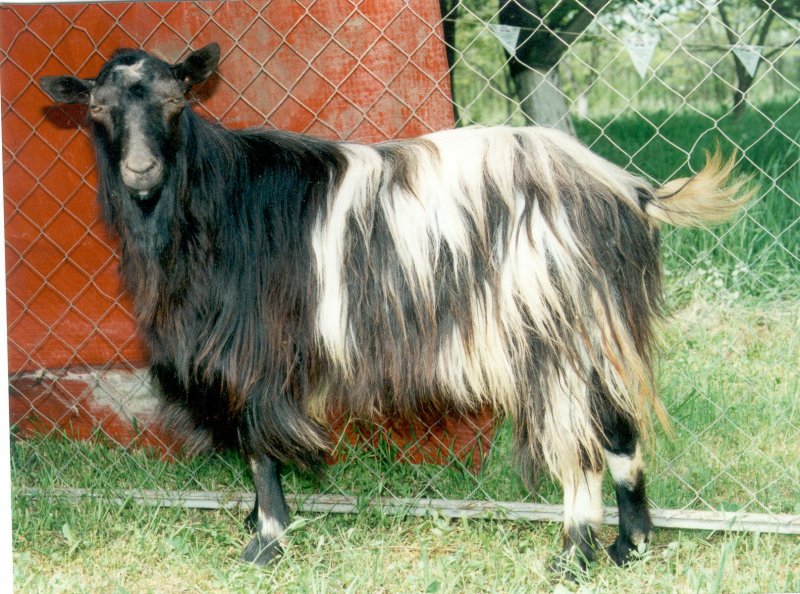
Colour: unicolour: white,black,grey,reddisch,brown,and many coloured
Weight: males (average) 50 kg/ females (average) 45kg
Height: males (average) 68cm/ females (average) 64cm
Country: Serbia, Montenegro
Description: With Domestik Balkan goat we differ two types : lighter (hilly-mountainous type) and heavier (plain area type). It is late-maturing.Body is covered with long goat` s hair, that can be in one colour : white, black, grey, reddish, brown, but also multicoloured. Goats are in general horned, but they can also be wihtout horns.
Balkan goat is today present in hilly-mountain areas, in dry and remote regions of the Balkans. In Serbia it exists in the Rashka region and partially in Southeastern Serbia. In Kosovo it is widespread, while in Montenegro it is mostly spread in border areas with Albania, in Karst regions ( Niksic and Cetinje municipalities) and along the coast. Out of all extensive bred livestock the Balkan goat is most frequently bred under very poor conditions. It spends almost an entire year in browsing and grazing. It is very active and dextrous in inaccessible, rocky areas. It is vital and resistant to diseases, modest regarding feeding and care, but also of modest production capabilities.
History: Wild ancestor of Balkan goat is Capra prisca – A d a m e t z. According to some statements, goat was bred in Balkans region already in times of ancient Romans. There are theories that in this geographic area besides Capra prisca existed also Capra aegagrus. It is considered that Capra aegagrus existed in much smaller numbers than Capra prisca, and that in time was pushed aside under the influence of ceratin breeds of goats from Apennine peninsula that Roman legionaries brught with them.
Uses: meat, milk
Breed Sources: : Autochthonous breeds of domestic animals in Serbia and Montenegro, Srdjan Stojanovic,DVM ; Dr. Suzana Djordjevic-Milosevic