
Details
 Address
Ahlman Vocational Institute
Hallilantie 24
FI - 33820 Tampere
Hallilantie 24
FI - 33820 Tampere
Telefon: +358 (0)40-7586658
Email: → ahlman@ahlman.fi
Webseite: → http://www.ahlman.fi
Description
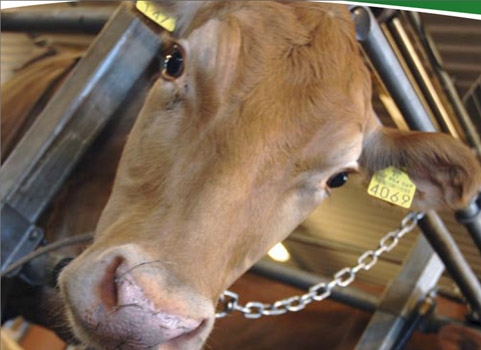
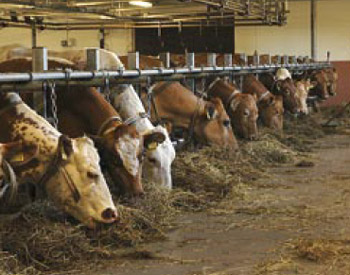
The red cowshed stands proudly in the yard of the Ahlman Vocational Institute. Ahlman’s Finncattle serve as a gene bank, the purpose of which is to preserve and refine Finncattle breeds with varying genetic lines. The farm specialises in native breeds, in order to maintain the professionalism and knowledge of rearing Finncattle. The native Finnish cattle breed is Finncattle, which is divided into three subtypes: Western, Eastern and Northern. Until the 1960s, Finncattle was the most common cattle breed in Finland, but its numbers have since decreased rapidly. Today only 1% of dairy cows are Finncattle (approximately 4000 cows).
Finncattle animals are small in size and naturally polled. Finncattle tends to be long-living and have a good fertility. Breeds are very well adapted to local conditions, but their milk production levels are lower than those of the current major dairy breeds. Finncattle is a dual purpose breed; it is used both for dairy and beef production.
Western Finncattle animals are largest of the three breeds and characterised by brown or reddish brown colouring. Northern Finncattle is white or white with black markings. Eastern Finncattle is typically brown with white back and belly (this colouring is called ”kyyttö” in Finnish).
The national animal genetic resources programme coordinated by The Natural Resources Institute Finland (Luke) helps protect the hereditary variation of Finnish domestic animal breeds. Domestic breeds are protected because they have economic, cultural and scientific value.
Native breeds are part of the Finnish cultural heritage. Science also benefits from having different types of animals to study. A diverse selection of breeds and animal species expands the scope and enhances the validity of scientific study. For example, native breeds provide study material for genetic research. A diverse genome increases the chances for native breeds to survive in the future.
Hereditary variation is prot
Category
City Farm/School Farm
Opening hours
You can check the opening hours on Ahlman´s website www.ahlman.fi
Infrastructure


Restaurant info
You can find more info about our Restaurants on our website https://ahlman.fi/ruoka/ravintola-anna/ and Farm Shop on https://ahlman.fi/ruoka/tilapuoti-ja-lahiruoka/
Accomodation info
Check out our latest info on https://ahlman.fi/tilat-ja-majoitus/majoitus/
Revision: 31. 03. 2021