
Breed: Rouen
Species: Duck
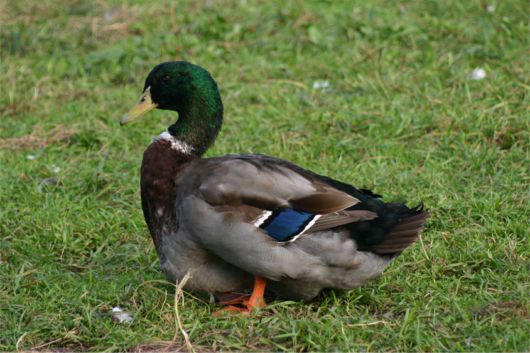
Description: Compared to other breeds, the Rouenente is a lot larger, but still has a noble shape and a calm temperament. It has a long, deep trunk with a protruding, full chest and a slightly arched back. Characteristic for this breed are the rectangular construction and the clearly developed keel, which runs from chest to rear. In addition to the wild-colored type that is frequently encountered, the wild-blue type has also been recognized in Germany since 1983.
History: Like most meat-producing breeds, the Rouenente comes from France. It was created at the beginning of the 19th century near the city of Rouen, from which the duck owes its name. Due to its close proximity to the Seine and thus its function as a port and trading town, some specimens of the breed reached England via merchant ships as early as 1820. End of the 19th century. it was also introduced to Germany.
Specials: Breeders refer to the Rouenente as the noblest form of wild coloring.
Performance: The Rouenente is characterized by its calm, frugal and tame nature. In addition, the meat, although a little darker, is extremely tasty and juicy. With a final fattening weight of 3.5 kg, which can be even higher for the drakes, the breed is well suited for quick and extensive meat production. Her laying activity does not begin until March, so she cannot be recommended as a laying woman. You can count on 80 eggs per year and an average weight of 80 g.